Redemption schedule checker · tokenized treasury vaults
Know When Your Funds Unlock.
Check redemption terms before committing your treasury funds. Billra estimates the day cash would arrive from the issuer's terms and flags a likely shortfall against your payment date.
Prototype. No wallet needed. Timing terms for the listed vaults are sample data until sourced terms are published; every estimate says which.
Built on what you can check yourself
Live reads
Supply, pause flags and issuer powers from Robinhood Chain
Sourced or labelled
Every term carries its source link or a Sample data badge
One set of rules
The site and the contract give the same date (400 shared test cases)
Nothing held
No wallet needed for a check, no funds, no token required
Your vault is not the problem.
The redemption queue around it is
Tokenized treasury funds pay out on the issuer's schedule, not when a bill is due. Cut-offs, notice periods, windows, gates and holidays decide when cash lands, and they sit in different documents.
Reading the terms by hand
Six steps, every time
- Find the cut-off and its time zone.
- Convert it to your own clock.
- Count notice in business days.
- Wait for the next redemption window.
- Add T+n settlement around holidays.
- Hope the window is not gated.
The result: a bill due on Friday, cash that lands on Monday, and nobody saw the holiday in between.
With Billra
One date, with its reason
- Pick the vault and your due date. Billra walks the terms in order and shows each date it passes.
- You get green, amber or red, the exact rule that moved the date, and the last moment a request still arrives on time.
The result: the shortfall shows up while there is still time to send the request, sell instead, or move the payment.
Start with one real bill
No account, no wallet, no data upload. Bring one payment date and one vault. Billra shows the path from request to cash.
- ✓SGOVWEEKSHY
Step 1
Pick one vault
One of the treasury tokens read live from Robinhood Chain, or a template that shows how weekly and monthly windows behave.
Start with one vault and one bill. That is enough to see the rule that matters.
- Payment due2026-11-27Request sent2026-11-25 · 17:00
Step 2
Enter the payment date
When the money must be in your account, and when you would send the redemption request.
- cut-off16:00 NYsamplenotice0 dayssamplesettleT+1sampleredemption fee0.05%sourced
Step 3
Read the terms
Cut-off and time zone, notice, window, settlement days, gate, holiday calendar. Each value says if it is sourced or sample data.
- 17:00 > 16:00next business day
Step 4
Apply the cut-off
A request after the cut-off, on a weekend or on a holiday counts from the next business day in the issuer's time zone.
Step 5
Count notice and wait for the window
Notice runs in business days; a weekly or month-end window can add days or weeks on top.
- WedThuFriMon
Step 6
Settle around holidays
T+n business days from the redemption day, skipping weekends and the calendar's holidays.
Every date Billra passes is listed, so you can check each one against the terms.
- on time · 2 business days spare thin margin · gate possible lands 3 days after the due date
Step 7
Get the verdict
Green with slack, amber with thin slack or a gate, red when cash lands after the due date. Plus the last request moment that still makes it.
One vault. One due date. Every rule shown.
Worked exampleSample terms
A bill due on Friday, a request sent one hour after the cut-off
SGOV on Robinhood Chain with Billra's sample terms: cut-off 16:00 New York, T+1, NYSE holidays. The request goes out on Wed 25 Nov 2026 at 17:00 New York. Thanksgiving falls on the next day. The numbers on the right are computed by the same rules the contract uses, not typed in.
3 days late
Cash would land on Mon 30 Nov 2026, after the bill is due on Fri 27 Nov 2026.
Rules that fired: request after the cut-off, holiday in the path, arrival after the due date.
Fri 27 Nov
the day the request counts from
Thursday is Thanksgiving, an NYSE holiday, so the next business day is Friday.
16:00
on Wed 25 Nov 2026: the last request that arrives on time
One hour earlier and the same request would have landed on the due date.
Cut-off and time zone
A request after the issuer's cut-off counts from the next business day in the issuer's clock, not yours.
Notice periods
Business days of notice between an accepted request and the first possible redemption day.
Weekly and month-end windows
Funds that only redeem on one weekday or at month end, including windows that roll past a weekend.
Gates
Whether a window can be limited, and whether your request alone is larger than the gate.
Settlement T+n
Business days from the redemption day to cash, skipping weekends and holidays.
Why treasury teams check with billra
Accuracy
One set of rules, in two places
The checker in your browser and BillraUnlockCalculator on chain run the same steps. 400 generated cases are checked against both on every test run, so a date on this page can be recomputed by anyone with one call.
Evidence
Every term shows where it came from
A source link and the document's hash, or a yellow Sample data badge. Nothing in between.
Control
You see the rule, not a score
Red means cash lands after your date, and the page names the rule that put it there: the cut-off, a holiday, a window, a gate.
Capacity
Check every bill in a month in a minute
Save plans in the browser, or on chain under your own wallet once the registry is deployed. Nothing is locked or moved.
You get the dateruledeadlineevidencedate
Billra answers one question well: when would the cash be here, and what decides it.
Keep the vault.
Remove the guessing.
No new custody, no deposit, no change to how you hold the tokens. Billra reads and calculates; you decide when to send the request.
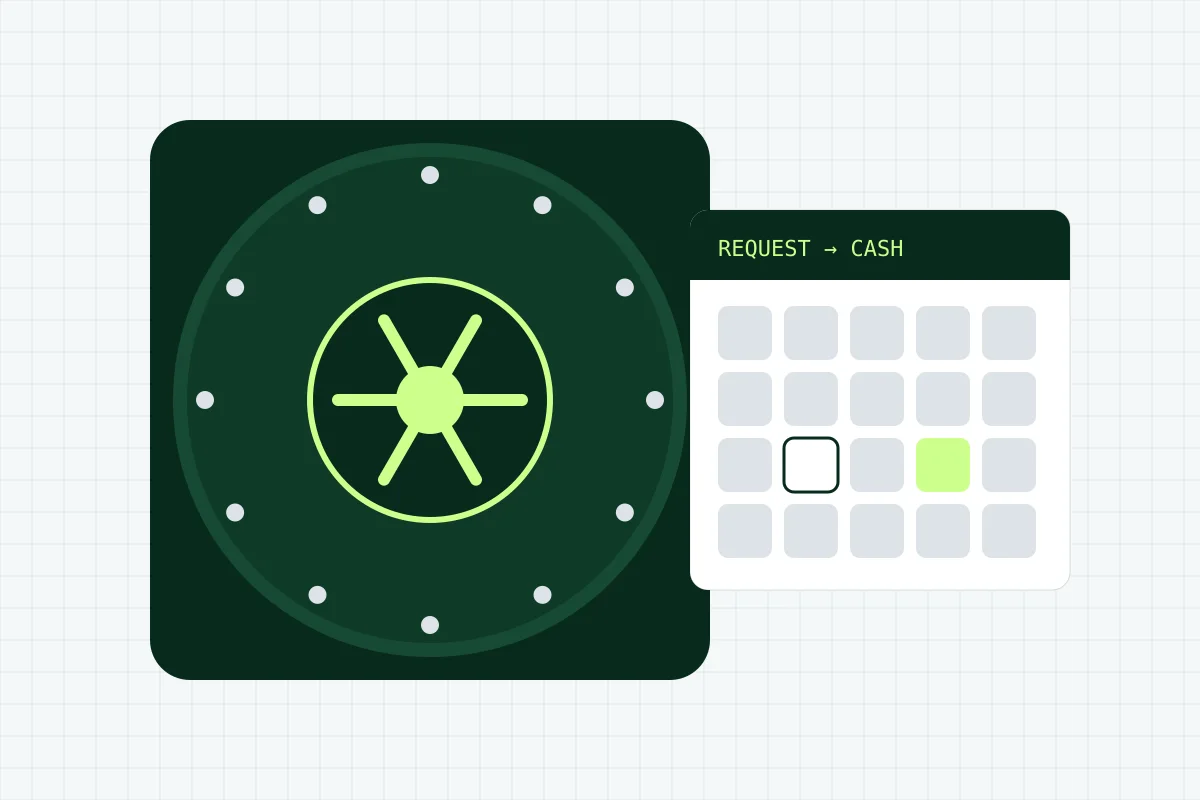
Where billra fits
Treasury bill ETF tokens
SGOV and WEEK on Robinhood Chain, read live.
Live from chain
Treasury bond ETF tokens
SHY on Robinhood Chain, read live.
Live from chain
Weekly-window funds
Template with sample terms: a Wednesday window, notice and a gate.
Template · sample terms
Month-end funds
Template with sample terms: one redemption day a month.
Template · sample terms
Small DAO treasuries
Contributor pay, grants and service bills paid out of a treasury vault.
Use case
Company bills
Rent, payroll and invoices due on a fixed date.
Use case
A billra check vs reading the terms by hand
What Robinhood Chain says right now
The three vault tokens, proven to be the issuer's own (code hash, beacon slot, supply), read when you opened this page.
All vault factsReading the chain…
What runs today, and what is a concept
Prototype = runs now and can be checked. Concept = proposed, not built. The token is not needed for anything marked Prototype.
- Prototype
Unlock date check
Pick a vault, enter when you would send the redemption request and when the payment is due. Billra walks the terms step by step (cut-off, notice, window, settlement, holidays, gate) and returns the estimated arrival day, a green, amber or red verdict, the rule that caused it, and the last moment a request still arrives on time.
Limit: Works without a wallet. The estimate is only as good as the terms it uses: for the three Robinhood treasury tokens those are sample data until sourced terms are published.
- Prototype
Vault facts from the chain
For each real vault token on Robinhood Chain: proof it is the issuer's token, supply, pause flags, what the issuer side can do to holders, the terms link the token publishes, the reference price where a Chainlink feed exists, and the chain's block time.
Limit: Holder counts need an indexer and are not shown.
- Prototype
Terms registry + on-chain calculator
BillraTermsRegistry keeps append-only terms revisions per vault with a source link and the hash of the source document; BillraUnlockCalculator recomputes any estimate on chain with the same rules as this site (400 shared test vectors).
Limit: Written and tested, not deployed yet. Until the owner deploys it the site uses the same rules in your browser.
- Prototype
Saved payment plans
Keep a payment plan (vault, terms revision, due date, amount) in this browser, or on chain under your own wallet once the registry is deployed. Nothing is locked or moved.
Limit: On-chain saving needs the registry deployment and a wallet; browser plans stay on this device.
- Concept
Calendar alerts
A reminder before a request deadline, and a note when a vault's terms change.
Limit: Not built.
- Concept
More vaults
Other tokenized treasury and money market vaults, once their issuer can be proven from chain data and their terms are sourced.
Limit: Not built.
- Concept
$BILLRA quotas
Higher limits for saved plans and alerts for holders.
Limit: Not built. Every feature above works without the token.
More questions?
More answers.
What does Billra do?
Do I need a wallet?
Does Billra redeem tokens for me?
Will my funds arrive on the date Billra shows?
Why are the terms for SGOV, WEEK and SHY marked Sample data?
What do green, amber and red mean?
How are time zones and daylight saving handled?
Where do the numbers come from?
What are the two contracts?
Can anyone publish terms?
What are the risks?
Do I need $BILLRA?
Token · launchpad TBA
$BILLRA on Robinhood Chain
Not launched yet: the address is published here at launch, and only here. Billra works without the token. Planned: holder quotas for saved plans and alerts. The token gives no claim on any vault, fee or yield.
About the token